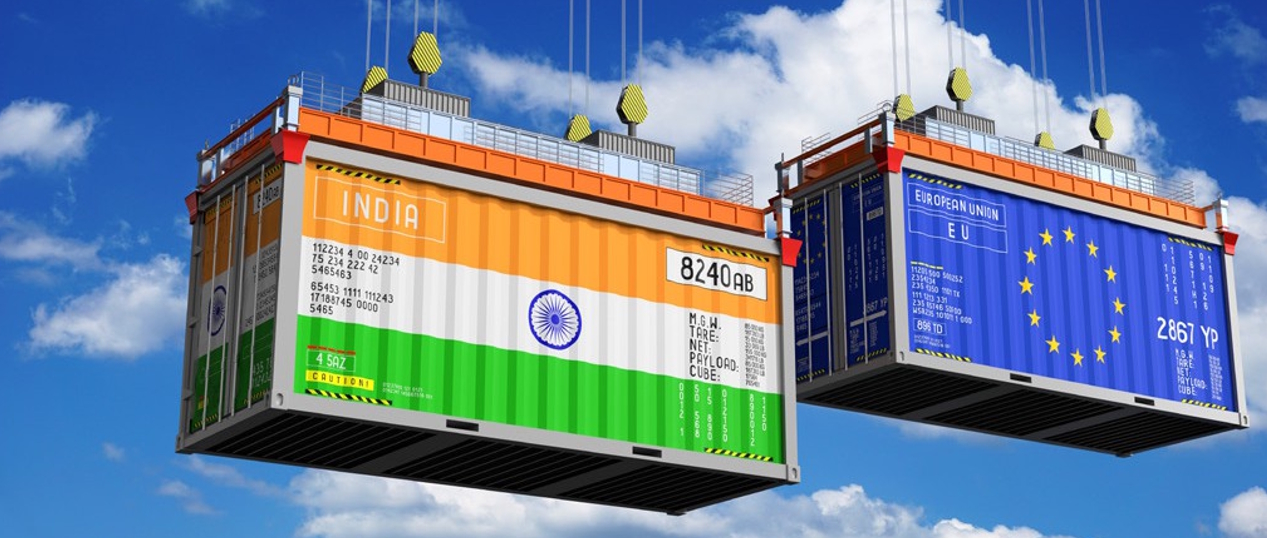
The EU and India concluded a Free Trade Agreement (EU–India FTA) on 27 January 2026, after long-standing and repeatedly interrupted negotiations that began in 2007 and were paused from 2013 to 2022 due to disagreements over certain trade barriers. The agreement will enter into force earliest in 2027, following approval by the European Parliament, ratification by EU Member States and India. At this stage, the final treaty text has not yet been made publicly available, and certain details of the agreement still need to be negotiated and finalized, but there are public statements regarding the contents of the FTA.
The FTA addresses key trade obstacles, opening new market opportunities for companies on both sides. Notable examples include:
Passenger cars: India currently imposes very high import duties of around 100–110% on EU cars, severely limiting market access for European manufacturers. Under the FTA,
tariffs will be phased down substantially over a 5–10 year transition period to 40 %, and in some cases even reduced to around 10%.
exported to India currently face duties of 40–45%, increasing production costs locally and slowing investments. The FTA provides for a gradual elimination of these tariffs, with most rates expected to reach 0% within 5–10 years after entry into force.
are currently taxed at over 150%, making them largely unaffordable for Indian consumers. The FTA foresees staggered tariff reductions, starting immediately upon entry into force, reaching 20–30% over several years.
The EU–India FTA is expected to bring significant benefits for both sides. EU exports to India could potentially double by 2032, covering over 95% of exports, with estimated tariff savings of around €4 billion. Improved access for services, stronger intellectual property protection, and greater supply chain resilience are also anticipated. Current EU–India trade is around €180 billion annually, supporting roughly 800,000 jobs, and may grow further. Together, the EU and India represent roughly 2 billion people (a quarter of the world’s population) and 25% of global GDP, making the FTA a step toward strengthening one of the largest and most dynamic trade and economic areas worldwide.
However, these projections are inherently contingent on a range of economic and regulatory variables and should therefore be interpreted as indicative scenarios rather than guaranteed outcomes. In particular, the effective realisation of the potential linked to the “Mother of all Deals” will depend not only on the formal entry into force of the FTA but also on subsequent domestic implementation measures. This includes, in a second step, the simplification of national market access regulations and the more effective enforcement of intellectual property rights. According to public statements by the negotiating parties, there is a declared political willingness to pursue such accompanying reforms, which would be instrumental in ensuring the FTA’s practical impact.
Luther’s India Practice Group advises and supports German and European investors in entering and expanding their business in India, as well as Indian companies seeking access to and operating within the EU. We assist clients both at the market entry stage and throughout ongoing operations, providing integrated legal, tax and regulatory advice across the entire business lifecycle. With a dedicated corporate services office in Gurugram, India and numerous offices across Germany and Europe, our teams offer seamless cross-border support, including market entry structuring, investments, M&A, compliance and ongoing corporate services.