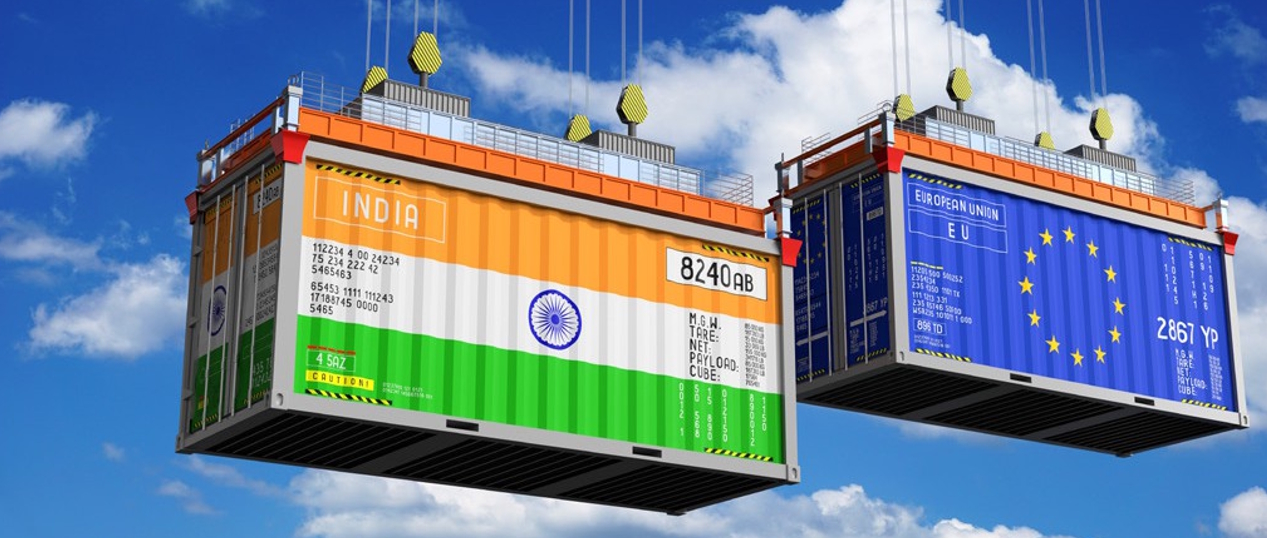
On 11 September 2026, the European Commission submitted proposals to the Council of the European Union for the signature and conclusion of the Free Trade Agreement (“FTA”) between the European Union and India described as the “Mother of all Deals”. This brings the FTA a step closer to signature, following the conclusion of negotiations on 27 January 2026 (as summarised in our Newsflash India in March 2026). The Commission has since made the FTA text available online, with tariff schedules published on 11 September 2026 and certain chapters published on 16 September 2026. The full text of the published tariff schedules can be found here:
The tariff schedules set out the timetables for the reduction and elimination of tariffs on various categories of products once the agreement enters into force. The FTA is expected to enter into force in 2027. However, it must first be approved by the EU Council and the European Parliament and ratified by India.
The published tariff schedules set out the areas in which tariff reductions will take effect immediately on the FTA’s entry into force or in a phased manner.
Passenger Cars: India currently imposes very high import duties of about 100-110% on EU vehicles, which severely restricts market access for European manufacturers. As per the published tariff schedules, India will gradually reduce tariffs on EU-built petrol, diesel and non-plug-in hybrid passenger cars. In the first year, tariffs will be as low as 30% depending on the car’s price range and will fall to 10% from the fifth year onwards. The number of cars eligible for such preferential tariffs shall rise every year until the 10th year. Tariffs on cars imported beyond this allocation will also be reduced over time, to 35% or 30% depending on the car’s value. Electric, plug-in hybrid and other passenger vehicles will also be covered by separate quota arrangements.
Wine: EU wine imports into India are currently subject to a tariff of 150%, making them largely unaffordable for Indian consumers. India will lower tariffs on qualifying EU-originating wine. In the first year, the tariff will fall to 75% and will decline further to 30% or 20% from the eighth year onward depending on the wine’s price band.
Fruits: India will offer preferential tariff rates for selected EU fruits, including apples, kiwifruit and pears. For apples, the tariff within the annual allocation will be 20% with the eligible quantity doubling from the eleventh year onwards. For kiwifruit, the tariff will fall from 16.5% to 10% by the 6th year and for pears, from 29.17% to 10% from the 6th year onwards.
To benefit from India’s envisaged preferential tariffs, products must genuinely originate in the EU under the FTA rules. This will be straightforward for goods wholly produced or harvested in the EU. For products made using non-EU materials, businesses will need to check the product-specific rule for the relevant HS classification. The Harmonised System (HS) is an international system for classifying goods for customs purposes. This may require sufficient manufacturing in the EU, limits on the non-EU inputs, or a particular production process. Simple operations such as repacking, labelling, mixing or assembly alone are not enough.
The free trade agreement between the EU and India will bring significant benefits to both sides. EU exports of goods to India could potentially double by 2032. Tariff reductions would benefit over 95% of EU goods exports to India, generating estimated annual tariff savings of approximately
€4 billion. Trade between the EU and India currently stands at approximately €180 billion per year and supports about 800,000 jobs in the EU. These figures are set to rise further. Together, the EU and India represent around 2 billion people (a quarter of the world’s population) and account for 25% of global GDP. The FTA is expected to further strengthen trade and investment in one of the world’s largest and most dynamic economies.
Beyond tariff reductions, the FTA is intended to create a more predictable and efficient trading environment for EU businesses in India. India has committed to measures aimed at speeding up customs clearance, including prompt release of goods and simplified procedures for traders. It will also work towards greater digitalisation of trade administration, including the electronic availability and acceptance of trade-related documents. The FTA provides for stronger intellectual property protection and enforcement. It enables rights holders to ask customs authorities to stop suspected counterfeit or other infringing imports at the border. Where goods are found to infringe intellectual property rights, they may be destroyed or removed from commercial circulation.
However, the extent to which businesses benefit will depend on how efficiently the new customs procedures and digital processes operate, and on the practical effectiveness of the intellectual property enforcement. According to public statements by the negotiating parties, there is a declared political will to push forward with such accompanying reforms, which would be of crucial importance for the effective implementation of the FTA.
Luther’s India Practice Group provides German and European companies with comprehensive advice on their business activities. We also support Indian investors with their operations in Germany and the EU.
We support and advise our clients throughout all stages of their business – from the market entry stage and throughout ongoing operations, providing integrated legal, tax and regulatory advice across the entire business lifecycle. Our India office also provides support services in areas such as bookkeeping, accounting, payroll, cash management, and payment processing. We have extensive experience with corporate acquisitions, joint ventures, and other forms of cooperation between German and Indian partners. With our dedicated corporate services office in Gurugram, India, as well as numerous offices in Germany and Europe, our teams ensure seamless cross-border support.